
International Apostille & Document Authentication
Three completely separate authentication paths exist — Maryland apostille for state-issued documents, federal authentication for federally issued documents, and embassy legalization for non-Hague countries. We educate you on which applies, coordinate the process your documents require, and handle submission end-to-end.

Which Route Applies to Your Document? (They're Completely Separate)
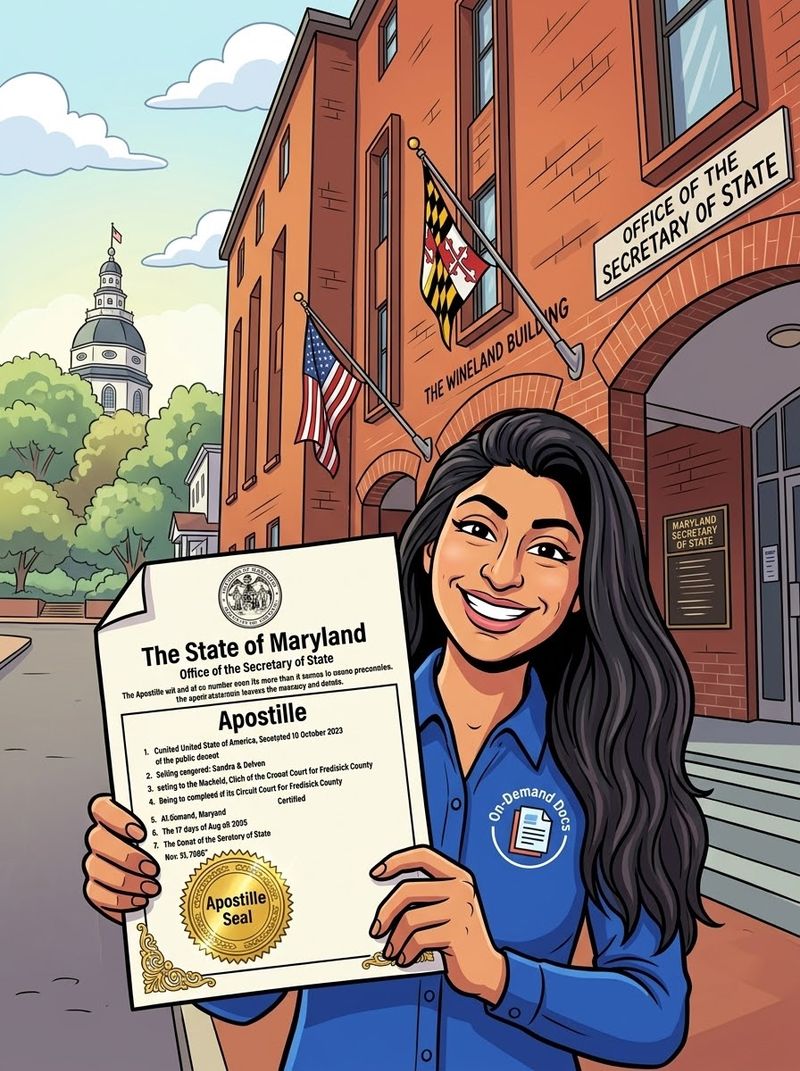
Why Documents Need Apostille or Authentication
Most people arrive here having been told they need 'an apostille' — without being told which of three completely separate processes applies to them. This page sorts that out.
These three routes are not interchangeable. Never mix them. Which one applies depends on two things only:
- Who issued the document — a Maryland vital record, a federal agency, or something else entirely.
- Which country needs it — that country's rules determine what authentication it will accept.
Here's what we do: We offer a free document review where we educate you on the authentication processes and help you understand which route applies based on your document's source and destination country. After that review, we can coordinate the handling of the process your documents require. We notarize any documents that need notarization as part of that process.
What we don't do: We don't give immigration or legal advice, and we don't tell you what to do with your documents specifically. That's between you, your attorney, and the destination country's requirements. What we do is use the information available to coordinate the path or process that your documents would require for authentication.
How Your Document Moves
Step 1: You Submit
Send document scans, photos, or originals to start the process.
Step 2: Free Review
We audit for errors, missing seals, and compliance gaps — at no charge.
Step 3: We Confirm Your Route
Based on your destination, we identify whether you need a Hague apostille, federal authentication, or embassy legalization (or a combination).
Three Paths From Here
Maryland Apostille Path: Document → Maryland Secretary of State → Apostille Stamp → Return to You. Timeline: 5–7 business days standard, 2–3 days expedited.
Federal Authentication Path: Document → U.S. Department of State (hand-delivered to DC walk-in counter for speed) → Authenticated → Return to You. Timeline: 7 business days walk-in service, up to 5 weeks for mail.
Embassy Legalization Path: Document → Federal Authentication → Washington DC Embassy → Legalized → Return to You. Timeline varies by destination country.
Step 4: Documents Ready for International Use
Your authenticated documents arrive certified, sealed, and ready for submission to your destination country.
Turnaround Times — Speed Built In
What we need: A clear photo or scan of the document, and the name of the destination country.
Why: Those two answers decide which of the three routes applies, and whether the document is even eligible in the form you have it.
What happens otherwise: A price quoted blind is a price that changes later. We would rather look first and tell you the real number.
What it costs to ask: Nothing. The consultation is free and nothing is committed until you accept a written quote.
International Apostille & Authentication FAQs
What's the difference between apostille and legalization?
An apostille is a single certification stamp that works in Hague Convention countries (most countries). Legalization is a multi-step process for non-Hague countries that requires state, federal, and embassy stamps. Which one applies depends entirely on your destination country's rules — we educate you on both during your free document review, and then coordinate the path your documents require.
How long does international apostille take?
There are really two sources: state-issued documents (like vital records — birth certificates, marriage licenses, divorce decrees) and federally issued documents (like FBI background checks, naturalization certificates, IRS letters). State documents go through Maryland apostille. Federal documents go through federal authentication. We can also assist you in getting new copies of vital records if you need them. Your destination country's rules determine which route applies, and we educate you on what's needed during your free document review.
Which countries need apostille vs. legalization?
Which countries are part of the Hague Convention and accept apostille depends on your destination. Non-Hague countries (including most Middle Eastern and some African nations) require full legalization. Your destination country determines which route applies. We'll educate you on what's required during your free document review — we don't give legal advice or tell you what to do with your documents, but we advise you on the authentication processes available.
Can you handle dual citizenship dossiers?
Yes. We're experienced with Italian (Jure Sanguinis), Indian (OCI), Spanish, Mexican, and other dual citizenship applications. We educate you on the processes, gather documents, and coordinate apostille and authentication steps when the documents qualify and timelines allow.
Do you work with adoption agencies?
Yes. We handle full adoption dossier apostille for domestic and international agencies, including multi-country legalization for Hague and non-Hague destinations — when your documents meet the requirements and we can fit the timeline.
What documents typically need international apostille?
Birth certificates, marriage licenses, divorce decrees, powers of attorney, diplomas, professional licenses, FBI background checks, IRS letters, and court documents are common. The right route depends on whether the document is state-issued or federally issued, and which country needs it. We can also help you get new copies of vital records if needed. We review your specific documents for free, educate you on what applies, and tell you exactly what the authentication process would look like.

Ready to Authenticate Your Documents?
Start with a free document review. We'll tell you exactly what your documents need and how much it costs.